Why Am I So Tired in the Gym? What Your Blood Might Be Telling You (And Why It’s Not Always Testosterone)

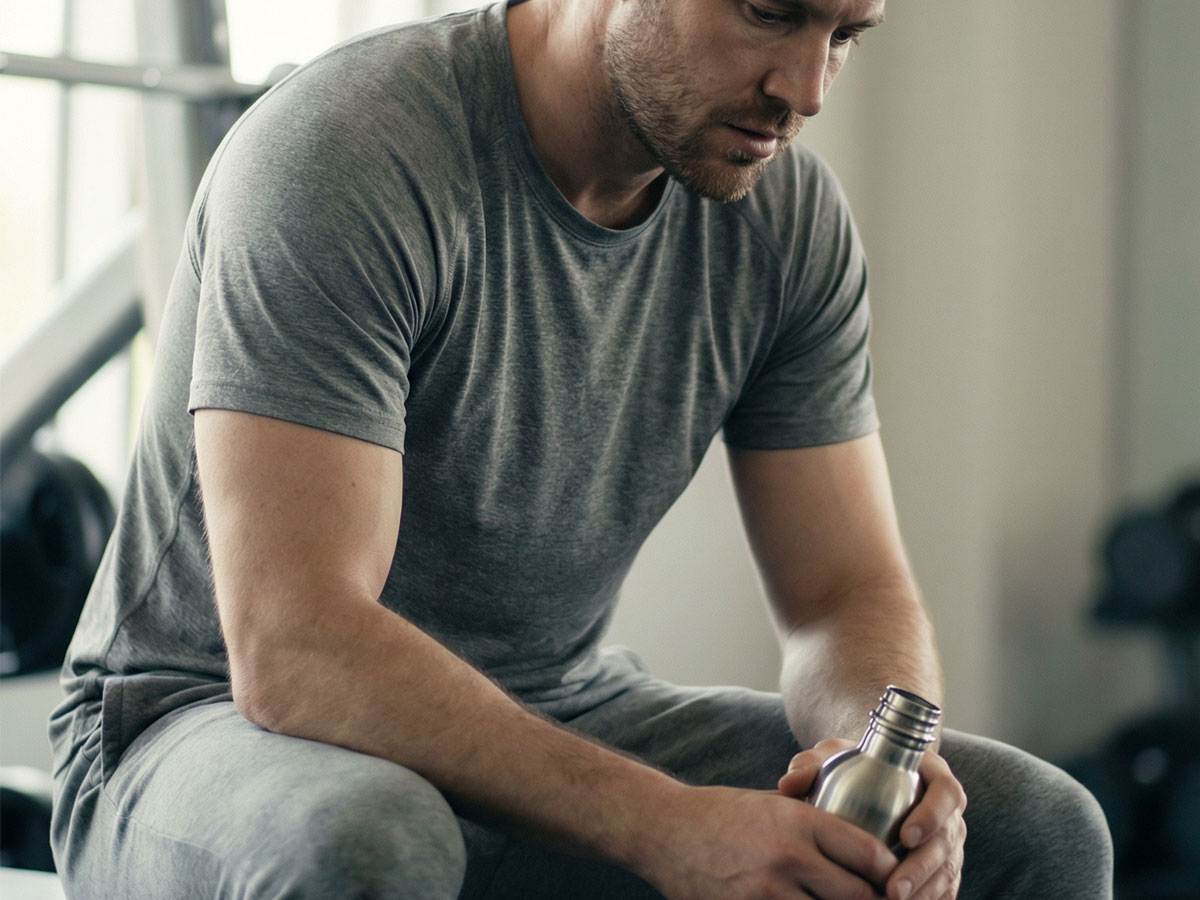
Several recent studies and reviews since 2020 address how low testosterone and non‑hormonal factors (overtraining, sleep, stress, micronutrients) relate to low energy, recovery, motivation, and performance in exercising men.
Testosterone, exercise, and performance
- A 2021 systematic review and meta‑analysis of insufficiently active men found that exercise training has only a small and inconsistent effect on resting testosterone, even though it improves fitness and body composition, suggesting that modest testosterone differences alone may not fully explain perceived low energy or performance issues in typical exercisers.[pubmed.ncbi.nlm.nih]
- A 2020 systematic review showed that acute bouts of physical exercise can transiently increase testosterone, but chronic training adaptations vary widely depending on training type, intensity, age, and baseline status. This again supports the idea that performance and energy during training are not simply determined by baseline testosterone.[pubmed.ncbi.nlm.nih]
Hypogonadism in exercising men
- A 2020 narrative review on hypogonadism in exercising males (often endurance athletes) described “exercise‑related hypogonadism,” where chronically high training loads and low energy availability reduce resting testosterone. Many such men have testosterone values 25–50% lower than expected for age and may meet biochemical criteria for hypogonadism.pmc.ncbi.nlm.nih+1
- Importantly, the review distinguishes at least two patterns:
- Men with low testosterone but preserved performance and motivation, where low testosterone may be an adaptive response (improved tissue sensitivity and lower stress reactivity) rather than frank pathology.frontiersin+1
- Men with low testosterone within the broader picture of overtraining or Relative Energy Deficiency in Sport (RED‑S), who show impaired recovery, reduced performance, and health issues; in these cases low testosterone is one component of a more global energy‑deficit problem.pubmed.ncbi.nlm.nih+1
Clinical trials in hypogonadal men and training outcomes
While not always in athletes, several controlled trials in hypogonadal men (testosterone < clinical thresholds) link testosterone, strength training, and function:
- A three‑arm clinical trial protocol (Strength training as supplemental therapy for androgen deficiency of the aging male, ADAM) set out to compare hypogonadal men on testosterone replacement therapy (TRT), hypogonadal men not yet on TRT, and healthy eugonadal controls undergoing a 12‑week strength‑training program. The primary outcomes include lean mass, physical function tests, and psychosocial functioning, capturing fatigue and quality‑of‑life aspects related to energy and motivation.bmjopen.bmj+1
- Prior RCTs summarized in that protocol show that:
- Progressive resistance training improved muscle function and strength in hypogonadal men, whether or not they were on TRT, with TRT mainly providing additional improvements in body composition (fat mass down, fat‑free mass up).[bmjopen.bmj]
- In a pilot RCT, combining exercise with TRT led to greater improvements in serum testosterone and hypogonadal symptoms than TRT alone over 12 weeks, and benefits persisted with continued exercise even after TRT cessation, suggesting synergistic effects on subjective energy and well‑being.[pmc.ncbi.nlm.nih]
These trials support that clinically low testosterone can reduce muscle mass and function and that correcting hypogonadism (with or without training) improves strength, body composition, and hypogonadal symptoms such as low energy and reduced motivation, although most studies are in older or clearly hypogonadal men rather than competitive athletes.pmc.ncbi.nlm.nih+1
Overtraining, RED‑S, and non‑hormonal causes of low energy
Overtraining syndrome and energy
- The EROS study (2019 but highly cited in 2020+ work) examined athletes with overtraining syndrome (OTS), healthy athletes, and non‑athletes across 67 parameters and found that OTS is best understood as a state of chronic energy deprivation, with “paradoxical deconditioning” and wide‑ranging endocrine, metabolic, and psychological alterations. Athletes with OTS showed underperformance, persistent fatigue, impaired recovery, and blunted hormonal and metabolic adaptations to training compared with healthy athletes.[bmjopensem.bmj]
- A 2025 case‑series on endurance athletes with OTS reported long‑term performance decline, impaired recovery, and multi‑system disturbances, with recovery taking several years; successful rehabilitation involved reducing training intensity and restoring adequate energy intake, rather than hormone‑focused therapy alone.[pmc.ncbi.nlm.nih]
RED‑S, energy availability, and hormones
- A 2021 review directly compared overtraining and RED‑S and concluded that most training‑overload/OTS studies that measured diet and expenditure showed decreased energy availability and/or carbohydrate availability in 86% of cases during heavy‑training periods. This energy deficit was associated with overlapping symptoms: fatigue, reduced performance, mood changes, disrupted reproductive hormones (including lower testosterone in men), and impaired recovery.[pubmed.ncbi.nlm.nih]
- The same review highlighted that both OTS and RED‑S likely originate in hypothalamic–pituitary alterations driven by low energy and low carbohydrate availability, which then secondarily affect gonadal, thyroid, and stress hormones. Clinically, this means low testosterone in an athlete should prompt evaluation of overall energy availability and training load rather than reflexively attributing symptoms solely to primary hypogonadism.pmc.ncbi.nlm.nih+1
Sleep, stress, and micronutrients
Direct 2020+ trials specifically in “physically active men with low energy during training” that isolate sleep, stress, or micronutrient deficiency from hormones are limited, but several consistent themes emerge from broader athlete and exercise literature:
- Sleep restriction in healthy men reduces daytime vigor, impairs exercise performance, and can modestly lower daytime testosterone in some studies (most of this work is pre‑2020 but frequently cited in newer reviews of athlete health and RED‑S).[pubmed.ncbi.nlm.nih]
- Reviews of OTS and RED‑S emphasize that psychological stress, inadequate sleep, and poor recovery practices exacerbate energy deficiency and contribute to symptoms of fatigue, low motivation, and impaired performance, even when baseline testosterone is within normal range.bmjopensem.bmj+1
- Micronutrient deficiencies (particularly iron, vitamin D, and sometimes B‑vitamins) are recognized in sports‑medicine reviews as contributors to fatigue and suboptimal performance; they often coexist with low energy availability, making differential diagnosis important. (Most specific micronutrient–performance RCTs in athletes remain pre‑2020, but newer reviews still highlight these as common, non‑hormonal causes of low training energy.)[pubmed.ncbi.nlm.nih]
Distinguishing hormonal vs non‑hormonal causes in practice
Based on the above research, differentiation usually relies on:
- Clinical picture
- Primary hypogonadism: persistent low testosterone on morning labs, plus sexual symptoms (low libido, erectile dysfunction), reduced shaving frequency, decreased spontaneous erections, low mood, and low energy; may or may not be training‑related.bmjopen.bmj+1
- Exercise‑relative hypogonadism/RED‑S/OTS: history of high training load, inadequate caloric or carbohydrate intake, recent performance drop, increased soreness, infections, mood changes, sleep disturbance, with or without biochemical low testosterone.pmc.ncbi.nlm.nih+2
- Laboratory pattern
- Primary hypogonadism: low testosterone with elevated LH/FSH; often not reversible by altering training alone.[bmjopen.bmj]
- Central (hypothalamic–pituitary) suppression from RED‑S/OTS: low‑normal or low testosterone with inappropriately low‑normal gonadotropins, sometimes accompanied by changes in other axes (thyroid, cortisol), and improvement when energy availability and training load are corrected.bmjopensem.bmj+2
- Response to intervention
- If increasing energy intake, improving sleep, and reducing training load restore energy, recovery, and performance (often with partial testosterone normalization), a primarily non‑hormonal/energy‑availability mechanism is likely.pmc.ncbi.nlm.nih+1
- If symptoms and low testosterone persist despite corrected lifestyle factors, clinical hypogonadism (requiring endocrine evaluation and possibly TRT) becomes more probable; RCTs show TRT plus resistance training in such men improves body composition and hypogonadal symptom scores.pmc.ncbi.nlm.nih+1
Example recent papers and links
Here are some key 2020‑onward or recent‑relevance papers and where to access them:
- Hackney AC et al. “Hypogonadism in Exercising Males: Dysfunction or Adaptive‑Regulatory Adjustment?” Frontiers in Endocrinology, 2020. (Open‑access full text: Frontiers in Endocrinology site or via PubMed Central.)frontiersin+1
- Potter NJ et al. “Effects of Exercise Training on Resting Testosterone Concentrations in Insufficiently Active Men: A Systematic Review and Meta‑analysis.” Journal of Strength and Conditioning Research, 2021. (Abstract and links to full text on PubMed.)[pubmed.ncbi.nlm.nih]
- Systematic review “Physical exercise acutely increases testosterone levels” (registered under PROSPERO ID 157348, published 2020). (Details and access via PubMed.)[pubmed.ncbi.nlm.nih]
- EROS study: “Novel insights of overtraining syndrome discovered from the EROS study.” BMJ Open Sport & Exercise Medicine, 2019, widely cited in 2020+ literature on OTS and RED‑S. (Open‑access full text on the BMJ Open SEM site.)[bmjopensem.bmj]
- Meeusen R et al. “Overtraining Syndrome (OTS) and Relative Energy Deficiency in Sport (RED‑S).” 2021 review on overlap of OTS and RED‑S and the central role of energy and carbohydrate availability. (Access via PubMed and publisher site.)[pubmed.ncbi.nlm.nih]
- “Overtraining Syndrome (OTS) in Three Endurance Athletes” case‑series, 2025. (Open‑access on PubMed Central.)[pmc.ncbi.nlm.nih]
- “Strength training as a supplemental therapy for androgen deficiency of the ageing male (ADAM): study protocol for a three‑arm clinical trial.” BMJ Open, 2019; includes detailed discussion of prior RCTs on TRT, strength training, and hypogonadal symptoms.pmc.ncbi.nlm.nih+1
Talk to an Eden Clinic doctor
This article is general information, not medical advice. If you would like your own symptoms, results or treatment options reviewed, our doctors offer private consultations in Plymouth and online.
Concerned about low testosterone?
Low testosterone is common, under-diagnosed, and treatable. Dr Angela Servis reviews every set of results herself, and the first step is a proper blood test. Questions? Call the clinic on 0333 335 6414.