Facial ageing, explained
Understanding facial ageing: what changes, layer by layer.
A plain explanation of what changes in the face with age, from the skin down to the bone, and why knowing which layer has changed is what decides whether any treatment would help. Doctor-led, assessed first, and honest when the answer is nothing.
From £250 · Assessment £20
Layer by layer
What actually changes in the face, layer by layer.
The face is built in layers: skin on the surface, pads of fat beneath it, the muscles and ligaments that move and hold it, and bone under all of that. Each layer ages in its own way and at its own pace, and what you see in the mirror is the sum of them. A hollow, a fold or a softer jawline is rarely the fault of one layer alone, which is why the same line can need a different answer in two different faces.
In the skin, the cells that make collagen and elastin slow down from early adulthood. The skin thins, holds less water and loses its spring, so it creases more easily and smooths back more slowly. Sun exposure speeds this up more than anything else you can control. Beneath the skin, the pads of fat that give a face its curves shrink and slip downwards. The cheeks flatten, the temples and the area under the eyes hollow, and the folds beside the nose and mouth deepen, partly because the fat that used to sit above them has moved.
The muscles that fold the skin when you frown, squint or raise your eyebrows crease it in the same place thousands of times a day, and in thinner skin the crease stays when the movement stops. Deeper still, bone remodels throughout life: the eye socket widens, the cheekbone sits further back, and the angle of the jaw and the chin lose definition. The soft tissue above loses its shelf and settles, so the widest part of the face drifts from the cheeks towards the jaw. Together these changes read as hollowing, sagging, lines and a tired look, even on a morning when you feel rested.
Which layer has changed decides whether anything would help, and what. Thin, dry skin with fine lines calls for a treatment that works on the skin: polynucleotides, skin boosters, peels or radiofrequency microneedling. A hollow where fat has gone is about volume, which is what dermal filler and collagen-stimulating filler are for. A line that only shows when you move comes from muscle, and anti-wrinkle injections work there. Skin that has started to loosen is sometimes a job for PDO threads. No treatment rebuilds bone, though filler placed deep on it can stand in for some of the support that has gone. The assessment is where this is worked out, and sometimes the honest answer is nothing, or not yet.
- You look tired in photographs on days when you feel fine
- Your cheeks seem flatter, or the hollows under your eyes deeper, than they used to be
- The fold beside your nose or the lines at the corners of your mouth have deepened
- Your jawline has softened and you cannot say exactly what changed
- You want to understand what has changed before you ask anyone to treat it
- You suspect the honest answer might be to leave well alone, and want someone to say so
What happens
The assessment has three layers of its own: look, understand, decide.
Look
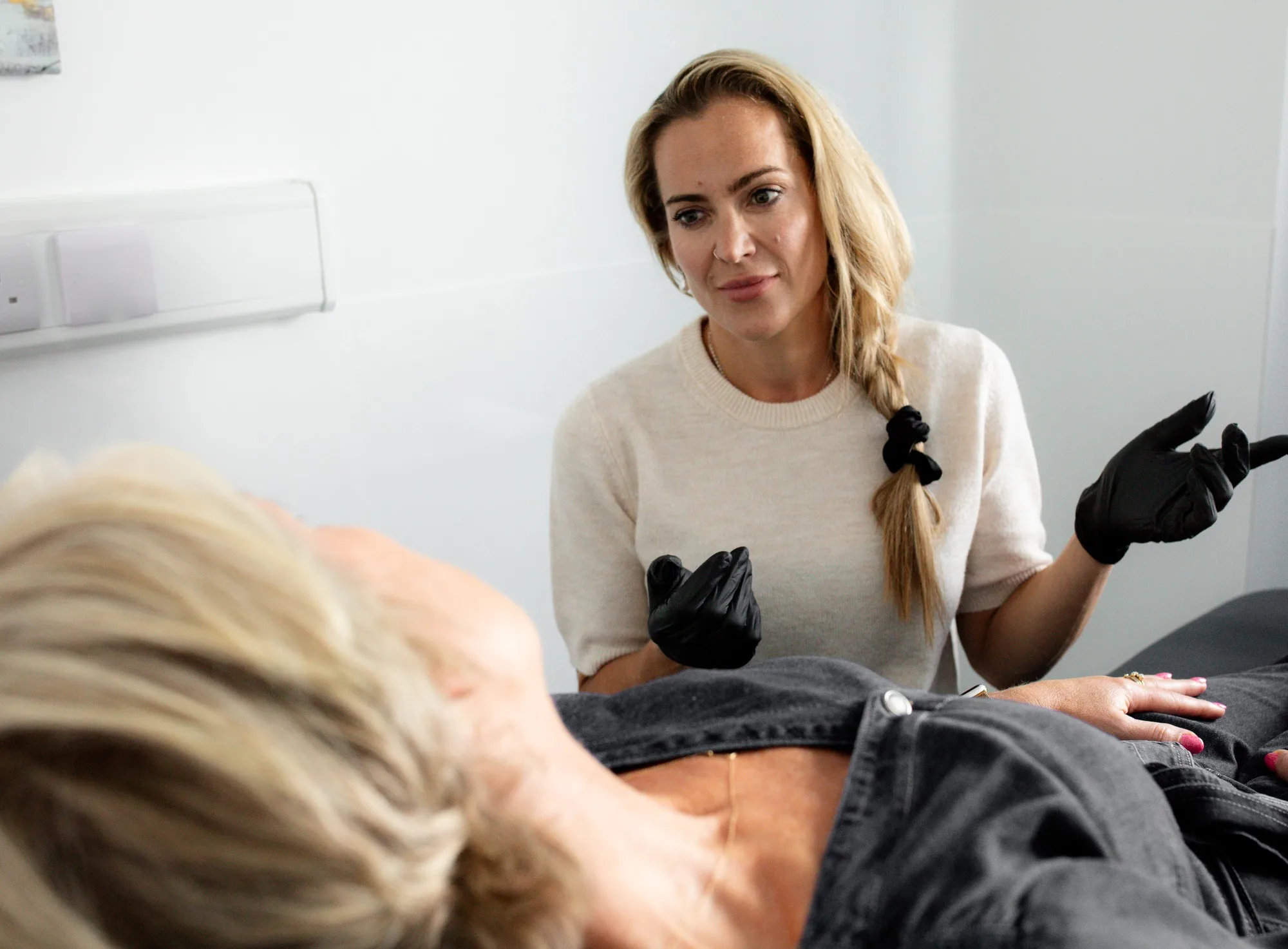
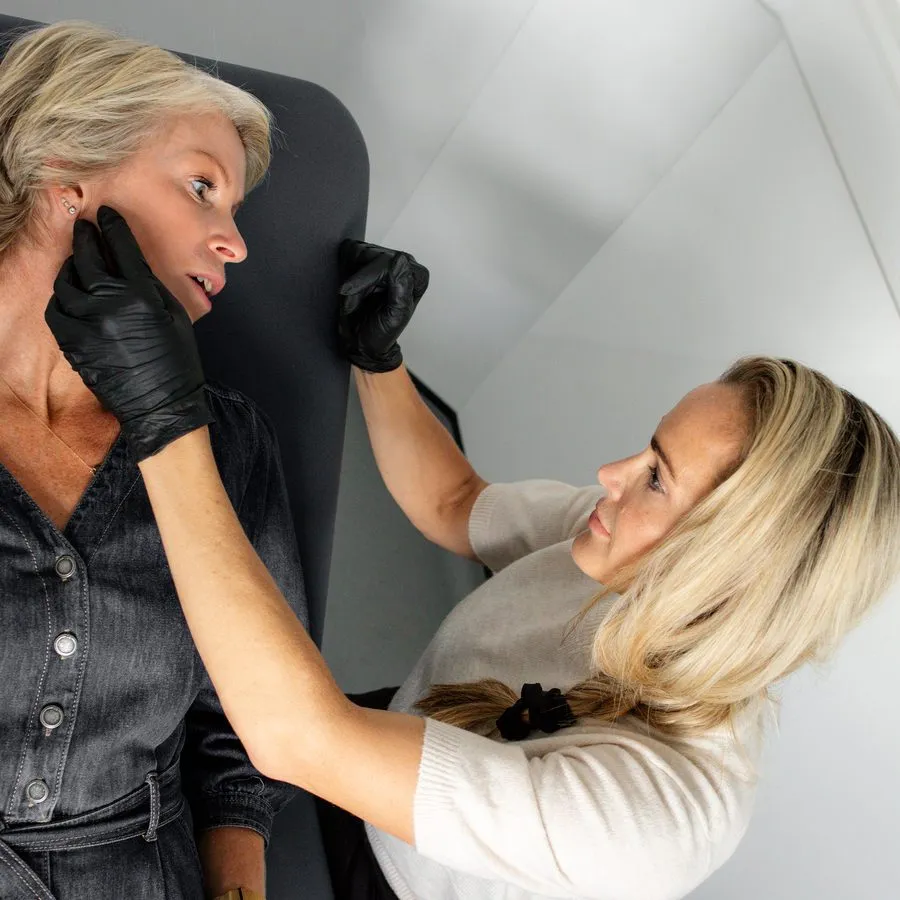
In good light, with your face still and then moving, the doctor looks at the skin, the fullness of the cheeks and temples, the hollows, the folds and the jawline, and gently feels how the tissue sits over the bone. We also want to hear which change bothers you, and since when.
Understand
We tell you plainly which layers have changed and which have not. A shadow under the eye might be thin skin, lost fat, a change in the bone, or all three, and each means something different. You leave knowing what you are looking at, whatever you decide to do about it.
Decide
Only then do we talk about treatment, if there is one worth talking about. We say which layer it would address, what it would and would not change, what it costs and where its limits are. Sometimes the right plan is one thing, sometimes a sequence over months, and sometimes nothing, or not yet. Nothing is booked on the day unless you want it.
- Collagen
- Production starts to slow from the mid-twenties, long before anything shows
- Sun
- Exposure is the largest controllable factor in how fast the skin ages
- Fat and bone
- Both change with age as well as the skin, which is why hollows and sagging appear
- Treatments
- One rarely addresses every layer; most work on one layer
Prices
Prices for the treatments mentioned on this page.
If you are new to us, every one of these starts with the assessment. The prices are here so you know the scale of each treatment before you book an assessment, and the assessment is where we say which layer has changed and whether any of them is worth having. The lines that movement makes, the muscle layer, are treated with a prescription-only medicine, which we discuss and price at the assessment rather than here.
| Treatment | Price |
|---|---|
| Assessment15 minutes with the doctor: look, understand, decide | £20 |
| Polynucleotide treatment, one sessionSkin layer: asks the skin to repair itself | £285 |
| Profhilo, one treatmentSkin layer: hydration and firmness | £250 |
| Dermal filler, per 1 mlFat and bone layers: volume where it has gone | £300 |
| PDO thread brow liftMild laxity: lifts a brow that has dropped | £890 |
Questions
The questions people ask about facial ageing.
Why do I look tired when I have slept well?
Because the look of tiredness is mostly structural. The pad of fat under the eye thins, the bone of the eye socket widens with age, and the skin there is the thinnest on the face, so a shadow forms that sleep does not remove. A flatter cheek and a heavier brow add to it. That is also why a cream rarely shifts it: the change is beneath the skin, not in it.
How do you work out which layer has changed?
By looking and feeling, in good light, with your face still and then moving. Thin skin shows fine lines at rest and creases easily when it is gently pinched. Lost fat shows as a hollow or a flatter curve that is still there when the face is relaxed. A line that goes when the muscle is relaxed is a movement line. Where bone has changed, the tissue above sits differently over it. Most faces have changed in more than one layer, and the assessment is where we say which.
Is there a right age to start thinking about this?
No. Collagen production starts to slow in the mid-twenties, and many people first notice a change in their thirties or forties, often as a tired look or a flatter cheek rather than a wrinkle. Others reach their sixties and want nothing changed. The assessment is the same at any age, and so is the honest answer: sometimes a treatment, sometimes a change to how you protect your skin, sometimes wait.
Can one treatment deal with all of it?
Rarely. Each treatment works on one layer: skin treatments on the skin, filler on volume, anti-wrinkle injections on the muscles that make lines, threads on skin that has loosened. If more than one layer has changed, the choice is between treating the one that matters most to you and a sequence over months, and the order matters. We say which we would start with and why, and you decide how far to go.
Will you tell me if I do not need anything?
Yes, and we do. The assessment fee buys an opinion, not a treatment. Sometimes that opinion is that what you see is normal, that the change is too small to treat well, or that a treatment would not reach the layer that has changed. You can come back whenever you like, and the treatment pages and the pricing page are there in the meantime.
Ask us
If you have any questions, just ask us.
You do not have to work out which appointment you need, and you do not have to write anything down. Leave your name, number and email, pick roughly what it is about, and a person rings you back within one working day.

Start with an assessment, and find out which layer it is.
Ring 0333 335 6414, or book online: pick a date and time and we confirm by email.