Sleep, Stress and Testosterone: How Your Lifestyle Can Sabotage Your Hormones

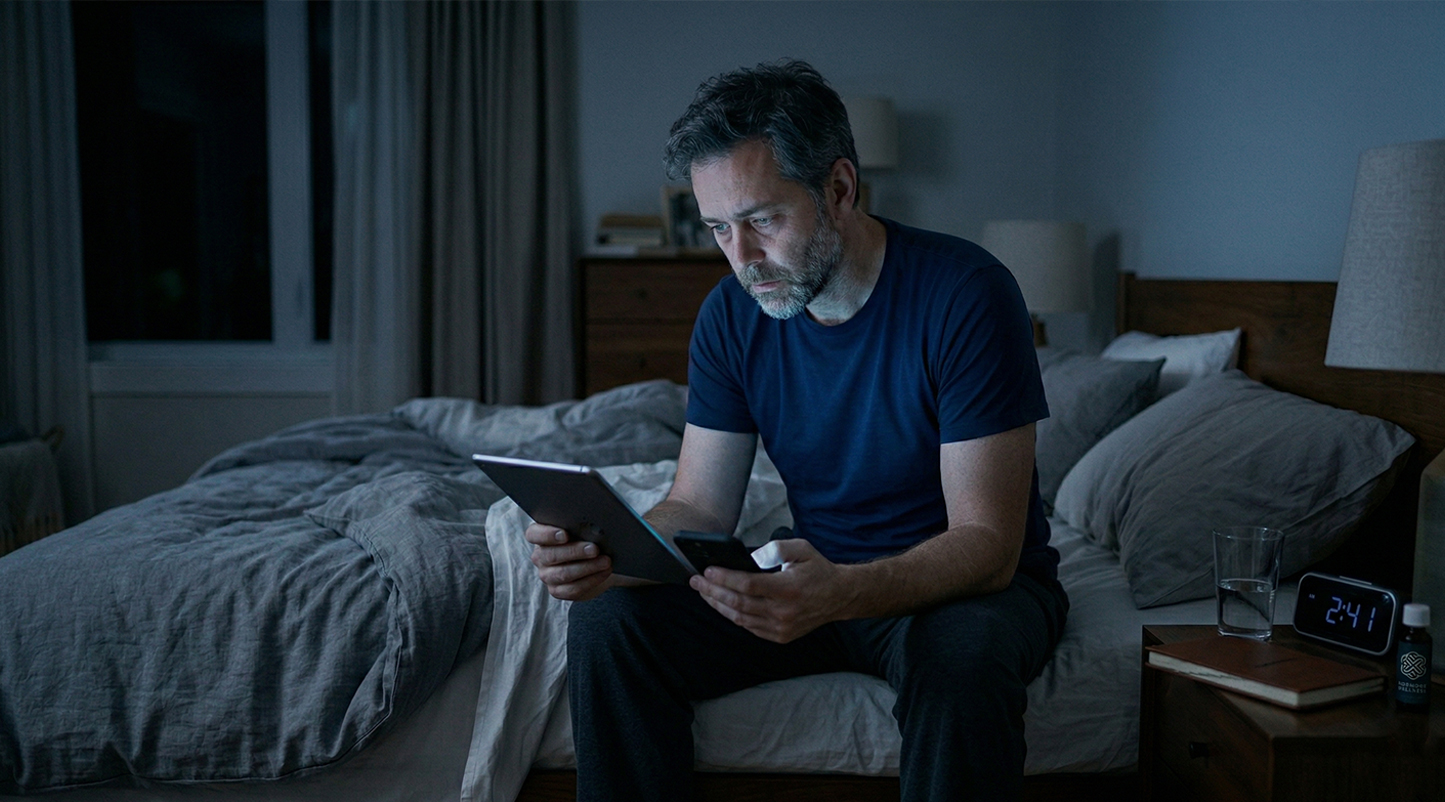
Most men think about testosterone in terms of age and genetics, but your daily choices around sleep, stress and recovery can quietly drag your levels down long before your birthday does. At Eden Clinic, we see this all the time: men in their 30s, 40s and 50s who feel older than they are, and whose lifestyle is doing their hormones no favours.
Sleep: When You Recharge Your Hormones
Testosterone follows a daily rhythm. Most of your production happens at night, with levels peaking in the morning and then gradually tailing off through the day. When you cut sleep short, stay up scrolling, or keep waking through the night, you're interfering right where that hormone "recharge" is meant to happen.
In the clinic, that often looks like:
- Poor or broken sleep
- No real "get up and go" in the morning
- Reliance on caffeine just to feel normal
- Lower libido and more flat days than you used to have
One bad night won't ruin your hormones. But if short, low-quality sleep is your norm, you're repeatedly asking your body to do more with less. Over time, that can flatten your natural testosterone rhythm and leave you feeling permanently underpowered.
Stress: The Cortisol vs Testosterone Tug-of-War
Stress isn't just in your head — it shows up in your hormones. When you're under pressure, your body raises cortisol to help you cope. Helpful in short bursts, but a problem when it's "always on".
Chronic stress can:
- Disrupt the brain signals that tell your testes to make testosterone
- Push you towards survival mode rather than repair and recovery
- Drive the behaviours that further lower testosterone (late nights, more alcohol, comfort eating, no training)
Many of the men we see describe the same pattern: long hours, constant low-grade stress, poor boundaries between work and home, and very little time where the nervous system is actually allowed to switch off. They come in for "low T", but the real picture is a stress-soaked lifestyle that has been undermining their hormones for years.
Weight, Movement and Everyday Habits
Lifestyle doesn't just affect how you feel; it changes the environment your hormones are working in.
Extra body fat around the middle is strongly linked with lower testosterone. Fat tissue converts more testosterone into oestrogen, and excess weight also drives inflammation, insulin resistance and sleep apnoea — all of which can drag your hormone profile in the wrong direction. The flip-side is encouraging: when men lose weight through diet and movement, testosterone often rises as part of that process.
Exercise matters too. Resistance training and sensible higher-intensity work give you short-term bumps in testosterone and, more importantly, improve strength, muscle mass and insulin sensitivity. For many men, a well-designed training plan does more for how they feel, perform and age than a syringe ever could.
Alcohol is another quiet saboteur. Bigger or more frequent drinking sessions can:
- Disrupt sleep architecture
- Raise cortisol and inflammation
- Interfere directly with testosterone production
If your main stress-relief strategy is drinking, you're hitting your hormones from several angles at once.
How We Look At This At Eden Clinic
At Eden Clinic, we don't look at testosterone in isolation. When you come in feeling tired, flat or not like yourself, we want to know:
- How you're sleeping (and whether you might have sleep apnoea)
- What your stress load looks like day-to-day
- How much and how you're moving
- What's happening with your weight and waistline
- What your bloods are doing (testosterone, SHBG, thyroid, HbA1c, vitamin D, lipids and more)
Our Eden Wellman Plus blood panel and men's health assessments are built to join those dots. If your testosterone is low or borderline, we'll talk honestly about all the levers you can pull: improving sleep quality, managing stress more intelligently, adjusting training, optimising body composition and, where appropriate, considering testosterone replacement in a structured, monitored way.
A Practical Takeaway
If you feel more tired, less driven and less like yourself than you used to, it may not be "just ageing". It may be the combination of:
- Short, low-quality sleep
- Long-term stress with no off-switch
- Extra weight around the middle
- Inconsistent movement and heavier drinking than you'd like to admit
The good news is that these are all modifiable. You can't change your date of birth, but you can absolutely change the environment your hormones are trying to work in.
Talk to an Eden Clinic doctor
This article is general information, not medical advice. If you would like your own symptoms, results or treatment options reviewed, our doctors offer private consultations in Plymouth and online.
Concerned about low testosterone?
Low testosterone is common, under-diagnosed, and treatable. Dr Angela Servis reviews every set of results herself, and the first step is a proper blood test. Questions? Call the clinic on 0333 335 6414.