Botulinum Toxin — Migraines to Lines and Wrinkles

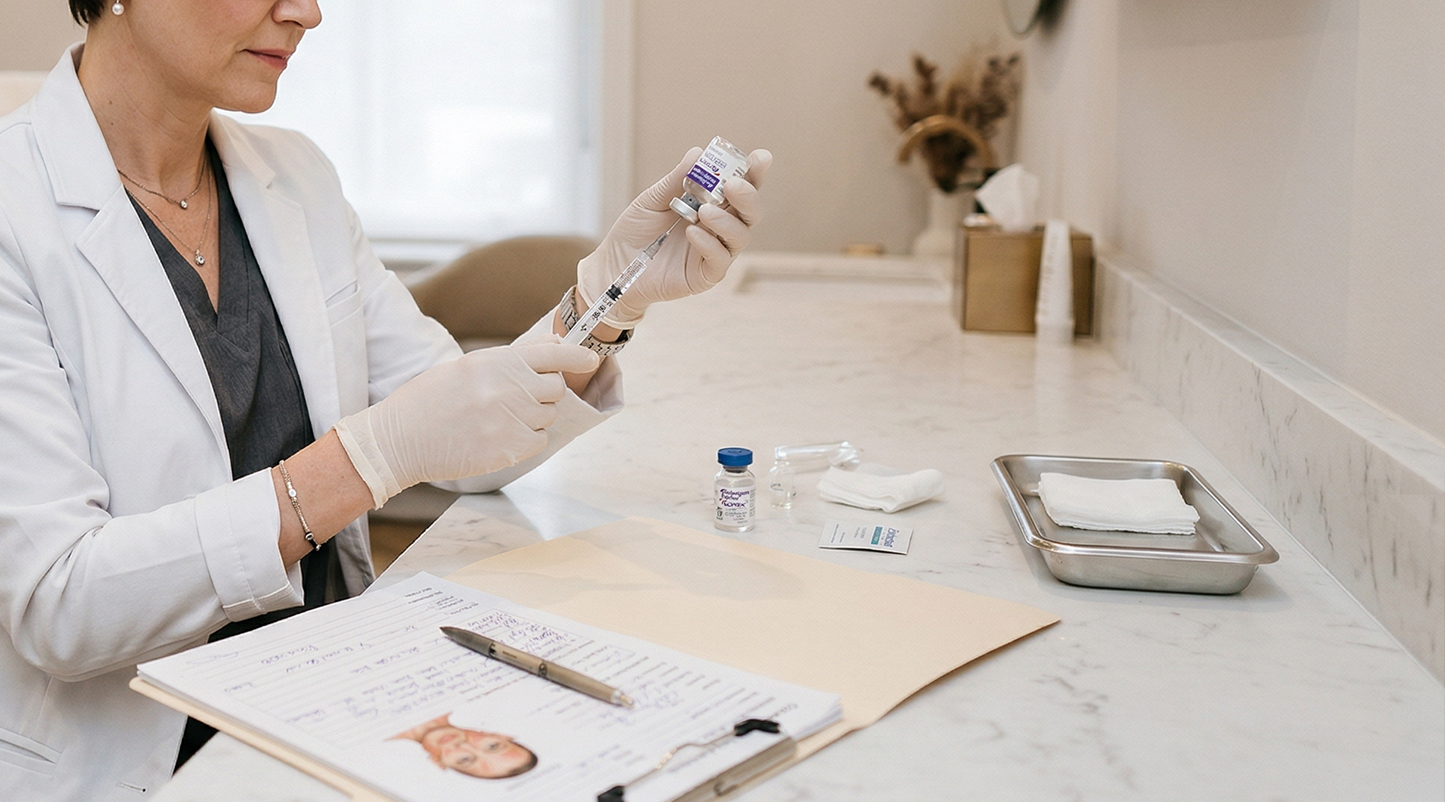
From “sausage poison” to one of the most versatile drugs in modern medicine, botulinum toxin has had a remarkable journey. Today it is used safely and predictably for everything from jaw clenching to migraines and sweating, when prescribed and administered correctly using regulated pharmacy-supplied products.
Origins: food poisoning and a new bacterium
Botulinum toxin first appeared in the medical literature as a cause of severe food poisoning. In the 19th century, outbreaks linked to contaminated sausages and cured meats led physicians like Justinus Kerner to describe a paralytic illness we now recognise as botulism; Kerner even speculated that the toxin might one day be used therapeutically to relax overactive muscles. In 1895, a large botulism outbreak in the Belgian village of Ellezelles allowed Emile van Ermengem to isolate and describe the organism now known as Clostridium botulinum and to confirm that the disease was caused by a toxin produced by this bacterium.
Through the mid-20th century, researchers demonstrated that botulinum toxin blocks neuromuscular transmission by inhibiting acetylcholine release at the nerve ending. This local, reversible “chemical denervation” made it attractive for conditions involving muscle overactivity. The first modern medical uses were in ophthalmology: botulinum toxin type A was approved by the US FDA in 1989 for strabismus and blepharospasm, marking its transition from poison to precise neuromodulator.
Medicinal uses today
Masseter (jaw) treatment
Botulinum toxin A is now widely used to treat masseter hypertrophy and bruxism (jaw clenching/grinding). Clinical studies show that carefully targeted injections into the masseter reduce muscle volume and electromyographic activity, improving facial contour and symptoms without significantly impairing chewing when appropriately dosed. A 2024 study, for example, found that botulinum toxin A effectively reduced masseter activity and perceived bulk, with functional adverse effects mainly seen with repeated high-dose treatments, underlining the importance of skilled dosing and follow-up.
Hyperhidrosis (excess sweating)
Randomised controlled trials have demonstrated that botulinum toxin A is a safe and effective treatment for primary axillary hyperhidrosis. In a multicentre double-blind trial of 320 patients, 94% of those treated with botulinum toxin A achieved at least a 50% reduction in sweat production at four weeks versus 36% with placebo, with benefits persisting to at least 16 weeks and a low rate of mild, transient adverse events. This led to its adoption as a standard option for underarm sweating that is resistant to topical and systemic treatments.
Chronic migraine
OnabotulinumtoxinA is also an established prophylactic treatment for chronic migraine. The phase III PREEMPT trials (randomised, double-blind, placebo-controlled) showed that injections every 12 weeks significantly reduced headache frequency, headache days and migraine-related disability compared with placebo, with an acceptable safety profile. On the strength of this evidence, onabotulinumtoxinA is now licensed and recommended in guidelines for chronic migraine in patients who have failed other preventive therapies.
Acne and sebaceous control
More recently, small clinical studies have explored botulinum toxin A as an adjunctive treatment for acne. A 2018 prospective study in adults reported that very low-dose intradermal BTX-A injections were associated with reduced sebum production, decreased skin oiliness and improved post-acne texture over a two-week period, suggesting a role in regulating sebaceous gland activity. Evidence here is still early and based on small samples, but it reflects growing interest in non-muscular dermatological applications.
Overall safety and why “neurotoxin” is a misnomer
Botulinum toxin is often labelled a “neurotoxin” because, in its uncontrolled form, it is one of the most potent biological toxins known, capable of causing systemic paralysis. In medical practice, however, we are not injecting uncontrolled toxin; we are using highly purified, standardised pharmaceutical preparations in tiny, localised doses. Long-term safety reviews of botulinum toxin type A across neurological and cosmetic indications have found that repeated injections maintain efficacy over time without persistent structural damage to nerves or muscles, and that serious systemic adverse events are rare when licensed products and recommended dose ranges are used.
In that sense, “neurotoxin” is technically accurate at the molecular level but misleading in everyday language; in the context of prescription aesthetics and neurology, BTX-A functions as a local, reversible neuromodulating drug with a well-characterised safety profile. The main predictable adverse effect is localised, temporary weakness in the injected muscle or its immediate neighbours.
UK prescribing law and why seeing the prescriber matters
In the UK, all botulinum toxin products used for cosmetic and most therapeutic indications are prescription-only medicines (POMs). That means they can only be prescribed by appropriately qualified, regulated healthcare professionals such as doctors, dentists, prescribing nurses or pharmacists, following an individualised assessment of the patient. Importantly, the law requires a face-to-face consultation with the prescriber (in person or, in some cases, by video) before a prescription is issued for cosmetic use; remote “rubber-stamping” without direct clinical assessment has been repeatedly criticised by regulators.
Non-prescribing injectors (for example, many beauty therapists) cannot legally obtain genuine pharmacy-supplied botulinum toxin themselves. They must arrange for each patient to be assessed by a prescriber, who then issues a prescription specifically for that individual. If there is no prescriber–patient consultation, and no legitimate prescription, any “toxin” being used is highly unlikely to be a UK-licensed, pharmacy-dispensed medicine. Instead, it is likely to be an unregulated or grey-market product sourced outside normal supply chains, with no assurance of potency, purity or safety.
For patients, this is the key safety point:
- Always meet the prescriber responsible for your treatment plan.
- Make sure your product is a named, licensed brand supplied via a UK pharmacy.
- Be wary of anyone offering botulinum toxin injections where you never see or speak to a prescriber; this strongly suggests non-compliance with UK medicines law and potentially unsafe, unregulated products.
Used correctly, prescription botulinum toxin is one of the best-studied and safest drugs we have in aesthetic and neurological practice. The risks come not from the medicine itself, but from bypassing proper medical assessment, prescribing and product quality safeguards.
If you’re considering toxin for jaw tension, sweating, migraines or cosmetic concerns, make sure you’re seen in a medically-led clinic using regulated pharmacy-supplied products. At Eden Clinic, every treatment starts with a consultation with the prescriber, so your plan, your dose and your product are tailored to you and delivered safely within UK medical guidelines.
Sources
- The History of Botulinum Toxins in Medicine: A Thousand Year Journey — PubMed
- Safety and efficacy of botulinum toxin type A following long-term use — Wiley
- Botulinum toxin type A in treatment of bilateral primary axillary hyperhidrosis — BMJ
- Botulinum toxin — Wikipedia
- From poison to remedy: the chequered history of botulinum toxin — PubMed
- Botulinum Toxin: Overview, History, Mechanism of Action — Medscape
- The 200-Year Timeline on Botulinum Toxin — JDD Online
- Management of masseter hypertrophy and bruxism with botulinum toxin A — PMFA Journal
- Exploring botulinum toxin’s impact on masseter hypertrophy — Nature
- Botulinum toxin type A in treatment of bilateral primary axillary hyperhidrosis — PMC
- OnabotulinumtoxinA for treatment of chronic migraine — PubMed
- OnabotulinumtoxinA for treatment of chronic migraine (PREEMPT 2) — PubMed
- The effectiveness of botulinum toxin type A (BTX-A) in acne — Wiley
- The licensing of non-surgical cosmetic procedures in England — GOV.UK
Talk to an Eden Clinic doctor
This article is general information, not medical advice. If you would like your own symptoms, results or treatment options reviewed, our doctors offer private consultations in Plymouth and online.
Concerned about low testosterone?
Low testosterone is common, under-diagnosed, and treatable. Dr Angela Servis reviews every set of results herself, and the first step is a proper blood test. Questions? Call the clinic on 0333 335 6414.